The Apex

Humans can do things other animals can’t. Lot’s of animals can use tools, but humans can make them, and do more things with them. We can build structures with materials that we manufacture. We can pick objects off of the ground, and carry them long distances. We construct dwellings, and make fires to heat them, and to cook.

All animals hunt for food, but most predators chase down their prey, kill them with their jaws, or squeeze them to death. Humans can’t do those things, so we invented weapons and tools to kill or capture prey. Some humans decided that they didn’t like hunting and gathering, so they domesticated certain animals, and invented agriculture, eliminating chasing their food, and foraging for side dishes. Ranching and farming require physical skills, strength, and stamina. While some animals, those in captivity, are given their food, humans are the only ones who purchase it. We’re the only animals who pay other animals to prepare and deliver our food. We are the apex animal.

The human body is built to work. It’s made to bend, stretch, and rotate. Lift, and carry things. Swing clubs, axes, and hammers. Dig holes, and move earth. Build tiny houses, and skyscrapers. It takes strong people to build strong structures.

Lot’s of animals fight. Humans are born able to punch, kick, club, pin, and choke. We’re also able to invent weapons, and so we have, from war clubs to nuclear bombs. The human body is built to fight.

It’s also built to play. We can run, jump, throw and catch, push and pull. The human body is built to move.

All animals play, but humans organize play. We form leagues to play games all over the world. Basic human conflict, hitting each other with fists and feet, knocking someone down, and immobilizing them, have been organized play for centuries. We’ve invented balls, bats, glove, goals, and uniform playing fields, and made using those skills and fields highly lucrative forms of employment. Knocking people to the ground pays well, too.

All of the physical skills that separate humans from other animals have brought us to this point in the twenty-first century. Modern life has rendered many physical skills unnecessary. We don’t have to fell trees, and build our home ourselves. We don’t need to cut firewood, or fetch water. We don’t have to hunt and forage for food. No longer do we need to grow our own food, and in many places, large cities for example, it’s really difficult, if not impossible to do so.

Some of the skills that make humans the apex animal are lacking in many twenty-first century citizens. Indeed, many moderns consider many of those skills uncivilized, although we still beat people up for profit, and farming is making a comeback, albeit in a boutique style. Some people still hike to a camping spot, cut wood, and build a fire, and hunt game animals. Some people don’t like that. Still, humans have a body that can perform all of those skills, and it would be wrong to lose them. That body should be developed, and fully, whether or not every human practices every human skill.

Throughout history, humans have developed their bodies, and honed their skills. Until the twentieth century, physical conditioning through exercise was considered good citizenship. Socrates believed the body was useful in every human endeavor. Tired of being bullied by the French, Fredrick Ludwig Jahn developed a physical training system to build better Germans. The first attempts at codified physical education in America were designed to create capable, well-rounded citizens. Today, we view training related to sports, or shaping a pretty body. We’re never told it will make us better people. How could it?

What is a better human, and why should anyone so aspire? How could developing the strength to pick up heavy objects make someone a better person? We educate ourselves to become better people, indeed, to gain an advantage over people less educated. We adopt religious philosophies to become better people, in order to aid society, and, perhaps, get a leg up on admission to heaven. Mind, spirit. Why not body?

If your body could talk, collectively, and individual parts, it and they would tell you that it and they love to move. To run, jump, and play, to pick up heavy objects, even if the only purpose is to pick up heavy objects. Your individual muscles would tell you that they love to work together to perform a task. Your body would tell it benefits from working. Every system gets restored from use, and functions better when used regularly. If your body functions better, you’re a better person.

The goal is not to dominate other people. The goal is to be the best person you can be, one that is healthy, highly functional, able to use the gifts it was born with, and be helpful to the community. Strong people are useful.

In the United States, eighty-seven percent of the population lives in urban areas. It’s unlikely that all the physical skills that make humans the apex being are necessary for survival. Limiting our movements to walking, sitting, standing, pulling and pushing doors, and raising our arms to take an object off of the top shelf, however, is deadly.

No exercise movement is exactly like any athletic movement. At best, they mimic a sporting action. Hundreds of exercises, though, train the muscles that perform athletic feats. Stronger, more mobile, better conditioned athletes always win.

No exercise movement, except for walking, is exactly like any real life movement. Every exercise, though, trains the muscles that make every movement that humans can perform, even thinking. Stronger, more mobile, better conditioned humans always win.

There is no reason to insist that every human being be as physically fit as possible, but certainly one could ask why, given the superlative skills every human is given, every person doesn’t seek to, at least, maintain those skills. Why would anyone not want to be the best they could be?

In everything a person does, the body is useful. Strong people are useful. Stronger, more mobile, better conditioned humans always win.

Happy-Go-Lucky

“Luck”, wrote John Milton in the seventeenth century, “is the residue of design”. Two hundred or so years later, Louis Pasteur posited that, “Fortune favors the prepared mind”. Sometime around 1960, a spectator watching PGA champion Jerry Barber practice, hitting bunker shot after bunker shot next to the hole, commented on his luck. Barber replied, “The more I practice, the luckier I get”.

Merriam-Webster defines happy-go-lucky as blithely unconcerned; carefree.

Falls are the leading cause of injury among adults sixty-five and older. Emergency rooms treat three million older adults each year. One in five falls result in injury. Ninety-five percent of these injuries are hip fractures. Because women fall more than men, three quarters of hip fractures belong to them.

Nearly fifty-nine million people have hypertension. Almost two-thirds of people over sixty have it, more women than men. Folks with hypertension pay roughly twenty-five hundred dollars more per year in healthcare costs. The annual healthcare costs associated with hypertension is one-hundred and thirty million dollars. By the year 2030, those costs are estimated to be around two-hundred million dollars.

Orthostatic hypotension, or postural hypotension, is a form of low blood pressure that occurs when stand from sitting or lying down. It can make you dizzy or lightheaded. It can make you faint. It can make you fall.

When you stand, gravity pools blood in your abdomen and legs. Your blood pressure lowers, because you have less blood circulating back to your heart. Special cells called baroreceptors, located near the heart and arteries, sense the lower blood pressure. They contact the brain. The brain contacts the heart, tells it to beat faster, and pump more blood. The heart responds, and blood pressure is increased.

The causes of acute hypotension are simple things, like dehydration, or low blood sugar from lack of food. Chronic orthostatic hypotension is usually the sign of a larger problem. Heart problems, like low heart rate, or heart valve problems. Endocrine problems, like thyroid conditions, adrenal insufficiency (Addison’s disease), low blood sugar (hypoglycemia). Diabetes.

As we age, the baroreceptors near our heart and neck arteries slow. An aging heart may struggle to speed up and increase blood flow. Certain medications can create orthostatic hypotension. Hypertension medications, like diuretics, alpha blockers, beta blockers, calcium channel blockers, angiotensin converting enzyme (ACE) inhibitors, can, ironically, create orthostatic hypotension. So can certain antidepressants and antipsychotics. Muscle relaxers. Erectile dysfunction meds. The medicine chest of a lot of kids my age.

Casting no aspersions on the medical profession, it’s easy to see how a typical person could be blithely unaware. A patient, over fifty, has hypertension, and her doctor prescribes one of several popular medications. Her blood pressure lowers, and she lives a carefree life. One day, she rises from her chair, feels dizzy, and quickly sits back down. After a minute or two, she recovers, stands, and carries on. Dehydration, perhaps.

A few days later, however, another episode of lightheadedness occurs, again while rising. It, too, passes. After a week without incident, she rises quickly, faints, and collapses on the floor. Fortunately, no broken bones.

She consults with her doctor, who is wise enough to consider whether the medication he prescribed for her hypertension may play a role in her episodes. He ponders changing her dosage, while also gently reminding her that at the time he placed her on that drug, he also suggested that she start an exercise program. Showing great sagacity, he this time strongly advocates that she start a strength program.

This lucky woman’s doctor knows that exercise can make the heart stronger, and a stronger heart can pump more blood with less effort. The force on the arteries increases, and blood pressure lowers.

He knows, too, that strength training improves balance, even without practicing the typical balance exercises. For instance, training the squat pattern, the movement his patient was performing during her fainting episodes, increases over-all strength, and not just bi-laterally. It increases uni-lateral leg strength, too, and thus, improves balance. The proverbial two birds, while not necessarily killed, are at least aggressively confronted.

This Paracelsus knows that, true also of other interventions, there is no definitive proof that exercise, directly influences aging. It does affect the quality of aging. Move more, move strong, move better, live better.

Our lucky patient is now better prepared. Perhaps she is not blithely unaware. Perhaps she is blithely aware. You know, happy-go-lucky.

Daddy, Let Your Mind Roll On

In 1961, John F. Kennedy told Americans to ask what they could do for their country. In 1963, perhaps tired of waiting for an answer, he told them what they could do. Take a hike. Fifty miles. In twenty hours or less. Show the Commies how tough Americans are. Welcome to the New Frontier.

Kennedy’s challenge was the culmination of a series of events that began in the Eisenhower administration. On july 16th, 1956, President Eisenhower signed Executive order 10637, establishing the President’s Council On Youth Fitness. Ike did this in response to two events: Reports from the Pentagon detailing the number of young American men unable to meet the fitness requirements for military service during the Korean War, and a report from Dr. Hans Kraus and Bonnie Pruden showing that American children were less physically fit that than their contemporaries around the world. Alarmed by both reports, Eisenhower created the council to prepare America’s youth for service to the country.

Historically, exercise has been promoted as a tool to create better citizens. In Greece, in the 5th century, B.C., Socrates said, “For in everything men do, the body is useful, and in all uses of the body, it is of great importance to be in as high a state of physical efficiency as possible”. Boddidharma, in 5th century, A.D. China, taught the monks of the Shaolin Temple a type of kung fu, developing a strong body, as well as a strong mind and spirit. Seven hundred years later, at the Wu Dang Temple, Zhang SanFeng taught those monks the skill of Tai Chi, to create a whole person capable of taking care of the whole world, and himself.

The first structured efforts to teach what we now call physical education originated in Europe in the 19th century. Ling gymnastics originated in Sweden, and Jahn gymnastics was it’s German cousin. Pehr Henrik Ling made exercise a tool of established medicine, or, for some zealots, a replacement. Tired of Germany being bullied by the French, Fredrik Ludwig Jahn developed an exercise program called Turneverein. Jahn, however, was such a strong nationalist that even the German government grew weary of him, and sent him into a kind of exile in the German countryside, far away from the big cities, and impressionable German youth.

The first physical education program in a school in the United States was started in 1823 by Charles Beck, at The Round Hill School, in Massachusetts. Beck was a German, and had studied the Jahn system. The program at Round Hill was based on Jahn’s training principles, and while the goal was to produce well-rounded and physically capable citizens, there was no stated nationalistic purpose.

In cities and schools that could afford it, physical education was taught, exclusively to boys and men, as movements that would develop strength and stamina that would help them become more productive citizens. The approach changes in the 20th century, as football gained popularity. Games were seen as the way to get active and be healthy. Both basketball and volleyball were invented, at the Y.M.C.A., in Springfield, Massachusetts, to give clients winter activities. Throughout the last century, right up to today, physical education is game focused. The message of strength, stamina, and vitality, helpful in building good citizens, came from the burgeoning entrepreneurs of gyms and fitness equipment manufacturers. Basically, men were taught to be manly, and there were some female physical educators teaching women movement based on dance.

In December of 1960, John F. Kennedy wrote an article for Sports Illustrated titled “The Soft American”. Citing Eisenhower’s response to the reports of the Pentagon and Kraus and Pruden, he presented the traditional argument that physical fitness was essential to the development of capable, clear thinking people. Better citizens, if you will. Kennedy, however, took it a step further; he presented America’s collective softness as “… a menace to national security”. The reason, said JFK, was the threat posed by the Soviet Union. It was Us versus Them for world domination. Americans need to be strong for the fight.

Although the creators of physical education in America were nationalists, Kennedy’s reasoning was a first. He named a specific competitor that the physically fit American must conquer. The threat of Communism required strength and stamina in the defense of liberty. Strong Americans would allow the United States to “…realize our full potential as a country”. Strong Americans would prove the superiority of The American Way. Strong Americans were patriots.

Theodore Roosevelt loved and lived the strenuous life, and he wanted Americans to love and live it, too. While President, he exercised two hours a day, boxing, playing tennis, riding horses, hiking the trails around Washington, and skinny dipping in the Potomac River. His tennis partners were Army officers, known as the Tennis Cabinet. They related to TR their concern and disdain for the poor physical condition of many of their peers and superiors. In 1908, Roosevelt issued Executive Order 908, directing Captains and Lieutenants in the United States Marine Corps to complete a fifty mile hike in no more then twenty hours. “In battle, time is essential, and ground may have to be covered on the run. If these officers are not equal to the average physical strength of their companies, the men will be held back, resulting in unnecessary loss of life and probably defeat”.

Fifty-three years later, JFK learns of TR’s challenge, and sends a letter to General David M. Shoup, Commandant of the Marine Corps, issuing the same challenge. The modern Marine proved to be the equal of his predecessor, many completing the hike in one day, instead of the three allotted.

Robert F. Kennedy, the President’s brother, and also the Attorney General, took on the challenge, representing the Administration. He hiked fifty miles from Washington to Camp David in dress shoes. The press took notice, and, even though the President had not challenged them directly, so did the public. Everybody was talking about a new way of walking.

Fifty mile hikes and walks were sponsored by Boy Scout troops, college fraternities, and youth organizations, and individuals all across America tested their patriotic mettle. While not everyone completed the hike, many did, with several way under twenty hours.

Seventeen year old Ken Middleton, of the Aristocrats Athletic Club, Boonton, N.J., completed the hike in eleven hours, forty-nine minutes, in temperatures as cold a five degrees below zero. After wards, he said, “I’m too tired to think of anything”.

Kennedy’s call for America’s youth to get strong to confront the Soviet Union had two results. The first was a proxy Cold War with the Soviets, and ultimately, all the countries behind the Iron Curtain. From 1961 to the fall of the Soviet Union thirty years later, the United States used the Olympics and other world competitions to showcase the superiority of democracy over communism.

For kids my age, the other effect was The President’s Physical Fitness Award, given to junior high and high school students who met the standards of strength and stamina. Some of us loved it, some of us hated it. Standing broad jump, fifty yard dash, six hundred yard run, pull-ups (flexed arm hang for girls) push-ups, and sit-ups. One kid in my class did five hundred sit-ups in the seventh grade. In our senior year of high school, he did one thousand.

Kennedy knew that a nation founded on self-determination could not be forced to get into shape. Never the less, the President’s Council, created sixty-five years ago, exists today, renamed several times, and now with the added mission of teaching kids lessons on nutrition. Still, it cannot really be called a success. Physical educators who administered the test back in the day will tell you that they knew who would pass and who would fail before the test was given. The athletes would pass. The non-athletes would not.

The reasons for this are manifold, but the principle one is there was no plan or program to teach young people how to make physical training a simple part of a lifestyle. You can’t just tell people they’ll be better citizens if they’re physically fit, you must show them, all of them, even the “non-athletes”, a simple and easily doable way to become fit citizens. A cursory glance at society tells you that Americans received no such message. The number of obese people, especially young people, is staggering. The number of people with diabetes, heart disease, and osteoporosis, is sobering. Advances in pharmaceuticals and medical interventions allow us to live longer, but many of us are unable to live vigorously.

The basics of strength, nutrition, and good health are simple to understand, and easy to implement. It takes an effort, but not a super human one. The benefits, both to individuals and society, are well known. Physical fitness is not a requirement of patriotism, but what if it made you a better patriot? Roosevelt, Eisenhower, and Kennedy thought it would.

So, walk right in. Sit right down. Daddy, let your mind roll on.

Beautiful Strength

Around six percent of the English language is rooted in Greek. Some estimates say it’s twelve or fifteen percent. If you include words with a Greek prefix or suffix, that’s possible.

The Grecian formula for English words is usually two Greek words turned into one English word, such as hippo (horse), and potamios (river), to form hippopotamus. Sometimes, it’s a single word, like galaxy (milk). Lot’s of scientific and medical words begin with a Greek prefix (arthr = joint – arthritis) or suffix (y = tells condition – grumpy).

From the Greek words kalos and sthenos, we get the English word calisthenics. The English define calisthenics as systematic rhythmic bodily exercises performed usually without apparatus. The Greeks define kalos sthenos as beautiful strength.

Fans, and likely contestants, viewed the first games at Olympia, in 776 B.C., through the lens of aesthetics, which to them meant of sense, of perception. Kalos sthenos emphasized the pleasure that derives from the perfection of the human body. It allows the viewer to admire the perfection of the performer’s body, and the beauty of the strength that body displays.

Modern sports fans view modern athletes through the same glasses the ancients did. We admire the strong bodies of athletes. We admire the feats of strength they perform with those bodies. Both are perceived as beautiful. Our modern technology allows to see phenomenal athletic performances repeatedly, in slow-motion, and in individual images. The gracefulness of an athletic body under control is beautiful.

Outside of the arena of elite athletes, where the hoi polloi play, what is beautiful strength? For some, it’s hitting a passing shot with authority, deep into the corner. Others see it in piping a drive perfectly in the fairway, past their competitors. A few will find it hitting a three-run homer in the bottom of the ninth inning to win their Beer Softball League championship.

For a lot of kids my age, though, kalos sthenos is seen as living well. The elegance of an upright posture. Gracefully placing a bag in the overhead compartment. Rising from and lowering into a chair, without using their arms. Lowering sturdily to one knee and pull a weed, tie a shoe, look at a bug a grandchild has caught, and standing easily. Combing your hair at ninety. Ninety-two. Ninety-five.

There is an abundance of evidence that shows that many of the conditions and illnesses associated with aging can be controlled, even avoided, by maintaining physical strength. Osteoporosis, diabetes, and dementia can all be abated or avoided by strength training.

Becoming beautifully strong is simple, especially if you hold the Grecian point of view that a healthy body, mind, and spirit benefits society. If you practice often the movements you’ve been doing since you learned to walk, pushing, pulling, lifting, squatting, lunging, and rotating, you’ll maintain your beautiful strength, and benefit from a beautiful life. Society benefits from the aesthetic pleasure derived from the perfection of the human body.

Dying Is Easy

Jack LaLanne was right.

“Dying is easy. Living is a pain in the butt. It’s like an athletic event. You’ve got to train for it. You’ve got to eat right, you’ve got to exercise. Your health account, your bank account, they’re the same thing. The more you put in, the more you can take out. Exercise is king, nutrition is queen; put them together, and you have a kingdom”.

Kids my age remember Jack LaLanne from his eponymous television show. My mother watched it, and so did I. In what looked like his living room, using a chair, he led women across America in what he called Trimnastics.

“I want to show you how to feel better, how to look better, so you can live longer”.

I found the show interesting, and even at that young age, I was impressed by Jack’s physique. I thought the jump suit and ballet slippers were weird, but he looked strong, and had muscles like Superman.

“I want to show you how you can do it. What a team we’re going to be. I’m not here to entertain you, I’m here to help you”.

LaLanne was the first fitness guru to the masses. His first television show aired in 1958, his last in 1985. By then, it was syndicated, and broadcast nationwide. He wrote books, and recorded a couple of exercise records. He made Jazzercise, Jane Fonda, Denise Austin, and Gilad Jancklowicz possible.

“I know what it is to be sick. I know what it is to be well”.

As a teenager, he was a self-confessed sugar addict. A junk food junkie. He suffered from headaches, and had terrible acne. In 1939, at the age of fifteen, he attended a lecture given by Paul Bragg, a physical culture and alternative foods educator of the day. It changed his life. He gave up sugar, began eating what we now refer to as clean foods, and started exercising.

“You eat every day, you sleep every day, and your body was made to exercise every day”.

LaLanne was more than just a made for TV fitness guru. He was a legitimate athlete. Before he started his show, he owned a gym in San Francisco, which became a local, then a national chain. You might know them as Bally Fitness. He invented the leg extension machine, and the Smith machine, which tracks a barbell straight up and down. For the three big compound lifts, the squat, deadlift, and bench press, the straight bar path challenges the muscles in a different way. Both pieces of equipment are in every gym today.

“People don’t die of old age. They die of inactivity”.

Jack was what Dr. Jonathon Sullivan, the author of The Barbell Prescription, so eloquently calls the Athlete of Aging. On his seventieth birthday, he swam a mile, pulling seventy people, in seventy boats. He lived to be ninety-two, and he trained every day. Two hours, before breakfast. He practiced Intermitent Fasting before it was invented. He ate two meals a day, breakfast and dinner.

“Work at living, and you don’t have to die tomorrow”.

His mission, his ikigai, was to show people that, if they exercised and ate right, that they could look, feel, and live better. Using simple bodyweight exercises, and a chair, he taught his students how to tone their legs, hips, tummies, arms, necks, and chins, so that they could improve their physiques and health, and live long, productive, happy lives.

“Before you know it, success is yours”.

In one episode, Jack stands beside a box labeled 1,000 lbs. The always serious announcer intones, “And now, Jack will lift a thousand pounds”. Jack looks into the camera, into the faces of his students all across America, and explains. He admits that he can’t lift a thousand pound box. He opens it, and removes a five pound weight plate. Then another. He throws them on the floor, and removes another one. His lesson is that what seems impossible is indeed doable by taking small steps, and watching them add up. You don’t affect a big change all at once, but over time, little by little, using a well thought out plan. This advice is common now in modern self-help books. One change here, another there, and, step by step, you accomplish your goals. Simple, and in Jack’s words, easy.

“Your body is a temple, but how many tumble down shacks do you see?”

Jack LaLanne had a mission, and a message. His message was that, through exercise and good nutrition, you could live a long, happy, pain free life. His mission was to show you how YOU could do it.

“Dyng is easy. Living is a pain in the butt”.

Jack was right.

The Enlightened Grasshopper

Like most kids my age, I watched the television show Kung Fu. Weekly, from February of 1972 to April of 1975, I followed the exploits of Kwai Chang Caine, as he wandered across the American west, searching for his brother.

The plot of the show, on it’s surface, was a traditional western story: A man wandering alone, looking for his family. Kung Fu had two twists to this story. Kwai Chang Caine was a Chinese-American, the son of an American man and Chinese woman. He was also a Buddhist monk, from the Shaolin Temple.

Even though I watched the show faithfully, I’m not sure I grasped the subtle messages of Chan Buddhist philosophy spaced between the scenes of each weeks episode. I knew that they were important, because they came in flashbacks to Caine’s training time at the temple, where he was Grasshopper to his Master Po, and they preceded a pivotal, often climactic scene in the show: a fight between Caine and the bad man, or men, causing harm to innocent people. The Shaolin monks practiced a martial art called Kung Fu.

The words Kung Fu are Cantonese, and refer to any skill that can be learned by practicing or learning. Thus, the phrase does not give a name to a martial art. The Mandarin word wushu literally does mean martial art. So, Kwai Chang Caine practiced a skill, a kung fu, he learned during his time as an apprentice at the Shaolin Temple. The Shaolin style is regarded as one of the first institutionalized martial art.

Often as I watched the show, I wondered why a Buddhist monk, a religious man, would be taught a skill that could kill. The answer, I learned, is truly mundane. The monks at Shaolin needed exercise, and a man named Bodhidharma whipped them into shape.

Like most origin stories, the tale of Bodhidharma is covered in myth and mystery. Indeed, he may be a compilation of several people. He is said to have come to China from the west, some say India, some say Persia, in the fifth century, to teach Chan Buddhism. After some time teaching the Shaolin monks, he noticed that they were de-conditioned. They spent most of their time meditating, and did little else. According to legend, Bodhidharma went into a cave, and meditated (for seven years!). During his time in the cave, he observed the fighting styles of several animals. And so, it is said, Bodhidharma created what we call Shaolin Kung Fu. At some point in the nineteenth century, our hero Kwai Chang Caine learned the skills that Bodhidharma developed.

One hundred and eighty-four miles to the south of the Shaolin Temple is the Wudang Temple, another Chan Buddhist monastery. There, in the twelfth century, Zhang SanFeng taught those monks Tai Chi, which, fully developed, is a capable martial art, also so the monks there could develop their bodies, as well as their spirits and minds.

Around the world today, outside of Shaolin and Wudang Temples, Buddhist monks don’t practice a martial art. Many practice Tai Chi in it’s soft form, as a moving meditation, and a way to maintain strength and mobility. Some practice Yoga for the same reasons. In their ways, they continue the age old practice of developing spirit, mind, and body.

All over the world, seemingly from the beginning of recorded time, people have used exercise to help develop the whole person. It seems to me a natural tendency of the enlightened. Practice the arts and sciences to develop the mind. Practice philosophy to develop the spirit. Practice exercise to develop the body. Thus, the Whole Self is created. We in the modern world should continue that practice.

In the final episodes of Kung Fu, Caine does find his brother. The family reconciles. Indeed, Caine becomes Americanized. For me, though, one question remained unanswered. How was Caine able to walk across the American west barefoot?

The Hobgoblin

Consistency, said Oscar Wilde, is the last refuge of the unimaginative. Slow and steady, said Aesop, wins the race.

Milo of Croton was the strongest and greatest wrestler of his day, which was the 6th century, BC. The story of how he gained his legendary strength was, for a long time, told to illustrate both linear progression, and the principle of Specific Adaptation of Imposed Demand.

As a young man walking to work in fields each day, Milo hoisted a calf on his shoulders. He did this every day. The calf grew, and Milo did, too. Eventually, the calf became a full grown cow, and Milo became a full grown man. A really strong full grown man.

It’s a great story, but it is untrue. It cannot be true, for physiological reasons. If it was possible to get stronger in a strictly linear fashion, then every power lifter would go from bench pressing just the bar non-stop to loading the bar with a ton. Every body builder would easily progress from 98 pound weakling to a giant. Their muscles would have muscles. The human body simply cannot take constant overloads. In order to grow strongr in a linear fashion, it must reach a peak, the de-load, then peak again. Then again. Then…

The message that Milo really sends us is that consistency is not the hobgoblin of small minds. It is the key to gaining and maintaining strength. To make progress, you must train regularly. Punch the clock, as Dan John says. It is those punch the clock sessions, which occur far more often than those where records are set, where progress is made.

You get better at playing the piano by playing the piano, but you don’t get better by playing every now and then. You practice regularly, and you practice music that is hard for you to play, until you become skilled at that music. That is how you grow as a pianist. You can’t, however, practice Monday, and then again Saturday, and expect to become a better player. If you started Monday and practiced everyday, with the proper focus, it’s quite possible that by Saturday, you’ll be a better player.

The same is true in strength training. To get stronger overall, you practice exercises that are hard for you to do, until they become easy. Then, you either increase the load, until you master either the load, or the movement. However, unlike the piano, it’s unlikely that you’ll increase your pull-up maximum repetition from one on Monday to ten on Saturday, even if you practice everyday. With a good plan, and consistent effort, though, you will eventually reach your goal. The most necessary element is consistent effort. Even a poor plan regularly executed will produce results.

The gym is perhaps the only arena outside of the music studio where simply showing up regularly, and making an effort, is always rewarded. A training split of two days weekly will produce results, but only if you show up both days. So will training three, four, five, six, or seven days per week. Few things in life offer such a guarantee.

Be consistent. Slow and steady. Embrace your inner hobgoblin.

Citizen Fit

death-of-socrates-AB

Human performance comes always to us liveried in the extraordinary. From the playing field to the battlefield, the boardroom to the factory floor, the examples given us highlight the ultimate. The fastest one hundred meters in history. The perfect game. Incredible courage in combat. Human endurance tested by a disaster.

The common denominator in all these cases, save, perhaps for the willpower used to survive a disaster, is training. The sprinter, the pitcher, the soldier, all trained to accomplish their feat.

All discussions of physical training emphasize performance, because they should. Physical performance is naturally improved by intelligent training, which includes ways to test the program in session.

What does this mean to the proletariat? One could easily believe, looking at the way training is often presented, that the purpose of training is only to perfect athletic ability, or enhance the physique. To the bulk of the population not pursuing an athletic dream, nor fighting a war, nor protecting the citizenry, what is ultimate human performance? Does a bigger bench press improve an accountant’s arithmetic acumen? Can six pack abs help a bank teller become a loan officer?

man bench pressing

Some time ago, around the Fifth Century B.C., a man named Xenophon, who was a student of Socrates overheard a conversation between Socrates and another student, named Epigenes. Socrates noted that Epigenes looked as if he needed some exercise. Epigenes replied that he was not an athlete. Socrates saw a teachable moment, and, among many things, said this: “For in everything that men do the body is useful; and in all uses of the body, it is of great importance to be in as high a state of physical efficiency as possible. Why, even in the process of thinking, in which the use of the body seems to be reduced to a minimum, it is a matter of common knowledge that grave mistakes may be traced to poor health”.

Physical efficiency. Human performance, simplified.

Now, the Greeks revered the human body, and loved sports and competition, but Socrates is talking about the health and physical efficiency of Everyman, every day. He notes that the act of thinking is affected by the quality of the thinkers health. In essence, he says that physically preparing the body states clearly that you understand your importance to the rest of the world. To fully contribute, with a reduced risk of error, a person must be physically efficient. So it is, too, with the accountant, and the bank teller, you, and me.

When you can run one hundred meters in under ten seconds, you have achieved an ultimate human performance. When you can move your body easily through all ranges and planes of motion, produce power when necessary, and all your organs and involuntary muscles are working at top level with no strain, you have achieved ultimate human performance.

Physical efficiency is the perfect goal. The idea is failsafe simple; develop and maintain the ability to move with strength, power, and agility through all the basic human movements, improve your health, and your overall performance. Socrates would laud you as a valuable citizen.

Obviously, the easiest measurable’s of fitness are the most visible; increased strength, power, and endurance, better mobility, and a better body composition. Less touted, but just as important, and fairly well documented, are positive changes in mood, confidence, concentration, posture, and overall health. We train more than muscles and joints. We train the mind. We train the Central Nervous System, forcing it to pay closer attention to what we’re doing. Slowly, almost secretly, we become more physically efficient.

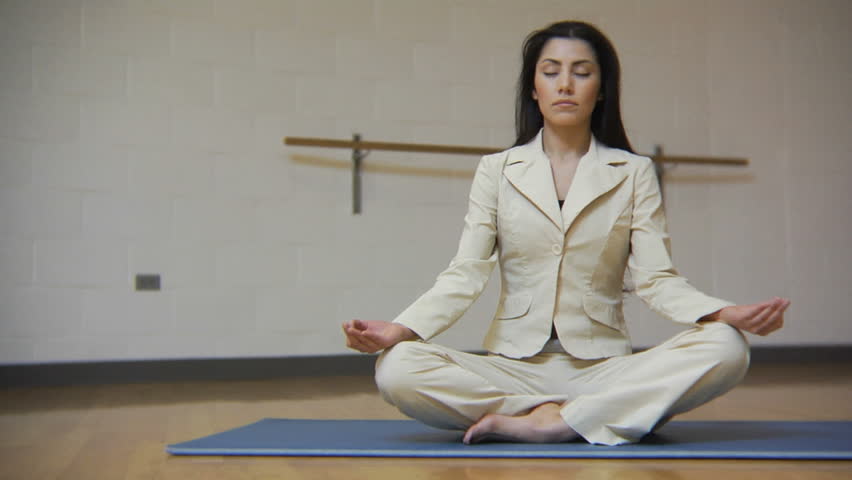
Pulling exercises develop a pretty and strong back. They also, usually, have a positive effect on a kyphotic posture, where the shoulders are rounded forward, typically, in Western cultures, from too much sitting. Outside of the gym, they give us the ability to take the groceries from the check out counter, walk to the car, open the trunk (because you were smart enough to get your keys out before you picked up the bags), and place the bags inside, with no strain. They can also give you a regal bearing, making your suit look even more elegant, and helping you make a powerful impression.

woman in suit yoga

As people train, they tend to make other lifestyle changes. Nutrition, sleep, alcohol consumption, and stress management, all seem to come under consideration. Often, the changes are subtle, almost unconscious. The body knows what it likes and what it needs, and it will tell you. Since training forces you to monitor your body, you will, gradually, learn to listen to it, and respond accordingly. Improved health improves performance.

Strength is relative, so training is easily regulated. Different goals require different protocols, and so do different temperaments. Some people seem to live to train, others seek the minimum effective dose. As with most things, there’s a large middle group, with goals that bridge the two extremes, but I’ll wager that they all share the same positive, “what the hell” aftereffects. I’ll bet they all feel more physically efficient, even if they don’t use those words.

Ultimate human performance is really composed of a lot of smaller parts. For instance, building a bigger bench press would be a phase of strength training for our accountant, and our bank teller’s six pack abs would be the result of a well thought out and executed nutrition and conditioning plan. Because of all the benefits of strength training, physical efficiency is a natural effect. Now, becoming stronger, or leaner, may not, by themselves, lead to better accounting, or a steady climb up the banking career ladder, but certainly, they can be influencing factors. Certainly, they won’t hurt.

woman pushing sled

“For in everything that men do, the body is useful”. Socrates considered maintaining physical efficiency a citizen’s duty. Perhaps. I’m not sure that it’s possible to quantify the residual benefits of physical training, and ascribing business or personal success to it could be difficult, but if Socrates is right, that the body is useful in every endeavor, then preparing it makes sense.

Physical efficiency. Ultimate human performance. Training transferred to daily life.

Fist bump from Socrates.

By the way, the picture at the top is The Death of Socrates, by Jaques Louis David. Socrates is pretty ripped for a seventy year old man.

Lose Weight, Look Great, Ask Me How

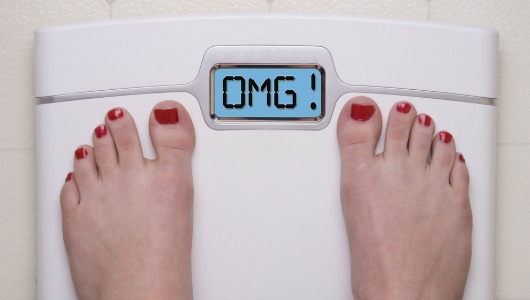
Losing weight is simple. Maintain a caloric deficit for a period of time. How you create the deficit is immaterial. For weight loss, caloric reduction is the only firm rule. Everything else is debatable.

weightloss omg scale

Simple is not the same as easy. Purposely creating and maintaining a reduced calorie diet requires a special mindset, and the body has certain needs. Caloric reduction affects how the body uses food, which in turn affects the body’s performance.

Dialing in nutrition is the hardest part of any fitness program, whether you’re trying to lose weight, gain it, or build muscle. How the body performs is the measure of a good nutrition plan, and by that I mean that the plan must provide the energy and strength to perform all daily tasks, grow and maintain tissue, ensure proper organ function, digestion and waste removal.

When it comes to nutrition, the only thing health and fitness professionals agree on is that you need it. What, how much, and even when, is hotly contested.

Nutrition is the total process by which an animal or plant takes in and uses food substances. To operate optimally, your groovy body requires three macronutrients, protein, carbohydrates, and fat, perfectly dosed.

Super simply stated, protein builds strength by growing and maintaining tissue, carbohydrates produce most of your energy, and fats are the most concentrated energy source, and provide some security and protection for your organs. The Recommended Daily Allowances for these three macros range from ten to seventy percent. The most common recommendation in the fitness world is thirty percent protein, forty percent carbs, and thirty percent fat.

weight-loss-tips fork and spoon

Most weight loss programs limit carbohydrate or fat intake. Think about that for a minute. The body’s two energy producers getting messed around in hopes of losing weight. When you consider the fact that it’s total caloric intake that affects weight loss or gain, does it make sense to alter the macronutrient profile, especially the two that make it possible to be productive?

Calories are manipulated for anabolic purposes. Exercise is used for physique enhancement. Consequently, diet and exercise, specifically eat less, move more, are the most prescribed duo for weight loss. Stressing the body with exercise, increasing the stress with a reduced calorie diet, and cutting your two energy sources to make the reduction makes weight loss success difficult.

Cleaning up your diet should be your first step in a weight loss program, even before you start training. Protein from beef, chicken, eggs, and fish, the fat that comes with them, along with nuts and natural oils, and lots of fruits and vegetables should be the bulk of your menu. Experiment until you find the perfect dosage for you. Combined with a good strength training program, you might lose weight and change your shape without drastically cutting calories. If you still desire to lose more weight, with the solid foundation you’ve established with your training and menu, it’s easy to adjust both of them to meet your goals. Eat and train to improve physical performance, and let weight loss be a result.

The key to long term success with weight loss is a realistic eating style, and not one that severely limits or omits one of the macronutrients. Our goal is optimum performance, in every part of life, not just in the gym. Instead of a diet, create a lifestyle.

Lot’s of us in the middle of life’s number line have some well-set habits, especially when it comes to food. We like what we like, and have for a number of years. When we decide to lose weight, or get in shape, we have to deal with those habits, and create a new lifestyle. This doesn’t mean that we have to toss away everything, but it does mean that we have to examine our habits, decide which can stay, which have to go, and which can be modified. Do you have to give up ice cream? No. Can you eat ice cream every day? It depends. How does it affect your performance, and hence, your lifestyle?

In my perfect world, everyone would train hard and eat a lot of food, while looking and performing like superheroes. We wouldn’t work, either, but that’s off topic. I believe that we should all create a lifestyle combining an eating plan with a training plan that maximizes our performance and allows us to enjoy living.

Want to lose weight, and look great? Create a healthy lifestyle. It really is that simple, not to be confused with easy.


Weight-Loss-tips1

From Banal to Sublime

A phrase I cannot stand is, “It’s not the destination that matters, it’s the journey”. Really? Without a destination, there is no journey, so it must have some importance.

That said, when it comes to strength training, I must admit, the journey does matter more, because the destination keeps changing. It’s difficult to focus on more than one area at a time, and there will be times when you want to emphasize conditioning, or mobility, losing fat, or building muscle.

Since I’m beating down hackneyed cliches… a journey of a thousand miles begins with one step. It’s a good idea to start out on the right foot. I can’t believe I just wrote that.

step

Here are ten tips for beginners.

1. Get your mind right. Fitness is more about “want to”  than anything else. Whatever your fitness goals, whatever your motivation, you must have the right mindset. Viewing training as something you have to do, instead of something you want to do, gives it too much gravity. Training, even really hard training, shouldn’t be seen as a chore. It should be simply another choice you make in a balanced lifestyle.

2. Get strong. Everything else becomes easer when you become stronger. Even if your goal is to lose weight, you’ll do it faster and easier by getting strong. Strength is often defined as work capacity. The most effective weight loss programs require a pretty high work capacity, because they tax the body severely with little rest. A good strength program will build muscular endurance first, and give your muscles, including the heart and lungs, a solid foundation. Should you decide to become a bodybuilder, being strong will make it easier to shape your muscles any way you wish.

3. Build muscle. Even if weight loss is your goal and primary motivator, you’re best off building muscle first. Muscle is more efficient than fat, burning calories longer after exercise and processing food better than fat. Remember, you can only tone muscle.

4. Dial in your nutrition (This leads to another tired cliche, “You can’t out train a bad diet”, but I won’t go there). It’s impossible to overstate the importance of good nutrition. Not only is a good nutrition plan vital to strength goals, it’s necessary to help recover from training. Lifting weights, even just your bodyweight, stresses the entire body, including the central nervous system. Recovery is part of the training process, and nutrition is a major factor in recovery. Eating a healthy diet full of proteins and healthy fats and carbohydrates allows you to train hard, build muscles, get strong, get lean, and get ready to do it again.

5. Recover. While it may seem a bit pedantic to mention recovery again so quickly after tip number five, there is so much more to recovery than just good nutrition. Fitness is measured by how quickly one recovers from exertion, and if nutrition is recovery tool number one, then sleep is one A. Myriads of studies show the efficacy of a good nights sleep, usually defined as seven or eight hours, on human performance, from the playing field to the office. While sleep is paramount, there are other, more active ways to recover from strength training. Experienced lifters will use active forms of recovery to recharge their bodies. Many powerlifters will follow a heavy squatting day with a two mile walk the next day. Trainees with more modest goals can use something like gardening as an active recovery tool. You make so many of the same movements; squatting, lunging, pushing, pulling, etc. without loads, allowing your body to easily put into practice all the training you’ve been doing with weights. With joints and muscles stress free, your body understands why you’ve been asking it to work so hard.

try this

6. Embrace the eighty/twenty rule. Way back in 1906, an Italian economist named Vilfredo Pareto discovered that eighty percent of the peas in his garden were produced by twenty percent of the pods he’d cultivated. He looked around, and saw that eighty percent of the land was owned by twenty percent of the population, and in business, he noticed that eighty percent of a given company’s revenue came from twenty percent of it’s customers. Also called the law of the vital few, it’s the same in strength training. A casual perusal of any mainstream fitness magazine will show you a bazillion exercises, usually to build arms, flatten stomachs, and lift butts (In Two Weeks!). Serious trainees rely on the standards, just like Tony Bennett. Squats and deadlifts, pushes and pulls, are the most used tools in their kits. The reason is because they produce the best and most consistent results. Remember, elite performers, whatever their arena, aren’t elite because they do the great things great; they’re elite because they’re great at the basics.

7. Focus on losing fat, not just weight. Truly, losing weight is simple (not to be confused with easy): Take in fewer calories than you expend. That’s not really healthy, nor does it produce the desired body composition most people seek. Even if you think you need to lose fifty pounds, you’re better off focusing your efforts on burning fat and building muscle. As I said way back in tip one, muscle is more efficient than fat. It burns more calories post exercise than fat, and it looks better, too. Because muscle is denser than fat, you could lose no weight, and still look marvelous. There is nothing unhealthy about muscle, and nothing healthy about fat. Fat is the weight we want to lose.

8. Train the whole body. Do you want a flatter stomach? Train the whole body. Is a higher, tighter tush your goal? Train the whole body. Do you have a desire to flash some serious “guns”? Train the whole body. All of the compound lifts, the push-up, bench press, pull-up, deadlift, and the squat, involve the whole body. Indeed, they require the whole body to participate. Try pushing against the wall with both hands. Feel your abdominals tighten? Squat into a chair, hold for a second, then rise. Feel your abs tighten again? Now, once again, do those same two exercises, and notice what happens in your butt, your legs, and your back. Your entire body wants to participate, and you’re better off allowing it to do so.

9. Embrace being a beginner. You will make your biggest gains in the first year of training. You’ll add more weight to the bar, do more sets and repetitions as a beginner than you will after you become an intermediate or advanced trainee, so embrace it heart and soul. After a couple of years, adding twenty pounds to your deadlift will be harder than it was in year one, but by then you’ll have the patience and fortitude that comes with experience.

10. Have fun. I like training. I like lifting heavy objects, I like hoisting myself on a bar, I like running, jumping, and playing. If training is a chore, like cleaning the toilet, it becomes just as unpleasant a task. Cleaning the toilet is necessary, and, for optimal health, so is physical training, but if training isn’t fun, or at least not “unfun”, you won’t train. However, if you set some goals, like a repetition maximum of ten pull-ups, build and execute a plan, carry it out, and then test yourself, you make training more attractive than it would be if you did because you felt like you had to in order to get in shape, whatever that means. Trust me, the stronger you get, the better you’ll feel, and the better you feel, the better you’ll do.

These tips guide my training, as well as the programs I write for my clients. Indeed, they are the guiding principles of all serious trainees. I offer them here, in a spirit of community, as a way of making the journey more important than the destination, and the first step in elevating the banal to the sublime.

Bon voyage.

Hikers_052913-617x416