Human performance comes always to us liveried in the extraordinary. From the playing field to the battlefield, the boardroom to the factory floor, the examples given us highlight the ultimate. The fastest one hundred meters in history. The perfect game. Incredible courage in combat. Human endurance tested by a disaster.
The common denominator in all these cases, save, perhaps for the willpower used to survive a disaster, is training. The sprinter, the pitcher, the soldier, all trained to accomplish their feat.
All discussions of physical training emphasize performance, because they should. Physical performance is naturally improved by intelligent training, which includes ways to test the program in session.
What does this mean to the proletariat? One could easily believe, looking at the way training is often presented, that the purpose of training is only to perfect athletic ability, or enhance the physique. To the bulk of the population not pursuing an athletic dream, nor fighting a war, nor protecting the citizenry, what is ultimate human performance? Does a bigger bench press improve an accountant’s arithmetic acumen? Can six pack abs help a bank teller become a loan officer?

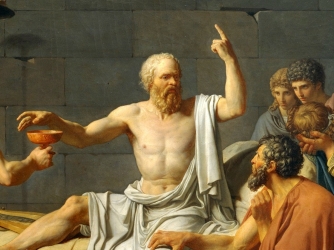
Some time ago, around the Fifth Century B.C., a man named Xenophon, who was a student of Socrates overheard a conversation between Socrates and another student, named Epigenes. Socrates noted that Epigenes looked as if he needed some exercise. Epigenes replied that he was not an athlete. Socrates saw a teachable moment, and, among many things, said this: “For in everything that men do the body is useful; and in all uses of the body, it is of great importance to be in as high a state of physical efficiency as possible. Why, even in the process of thinking, in which the use of the body seems to be reduced to a minimum, it is a matter of common knowledge that grave mistakes may be traced to poor health”.
Physical efficiency. Human performance, simplified.
Now, the Greeks revered the human body, and loved sports and competition, but Socrates is talking about the health and physical efficiency of Everyman, every day. He notes that the act of thinking is affected by the quality of the thinkers health. In essence, he says that physically preparing the body states clearly that you understand your importance to the rest of the world. To fully contribute, with a reduced risk of error, a person must be physically efficient. So it is, too, with the accountant, and the bank teller, you, and me.
When you can run one hundred meters in under ten seconds, you have achieved an ultimate human performance. When you can move your body easily through all ranges and planes of motion, produce power when necessary, and all your organs and involuntary muscles are working at top level with no strain, you have achieved ultimate human performance.
Physical efficiency is the perfect goal. The idea is failsafe simple; develop and maintain the ability to move with strength, power, and agility through all the basic human movements, improve your health, and your overall performance. Socrates would laud you as a valuable citizen.
Obviously, the easiest measurable’s of fitness are the most visible; increased strength, power, and endurance, better mobility, and a better body composition. Less touted, but just as important, and fairly well documented, are positive changes in mood, confidence, concentration, posture, and overall health. We train more than muscles and joints. We train the mind. We train the Central Nervous System, forcing it to pay closer attention to what we’re doing. Slowly, almost secretly, we become more physically efficient.
Pulling exercises develop a pretty and strong back. They also, usually, have a positive effect on a kyphotic posture, where the shoulders are rounded forward, typically, in Western cultures, from too much sitting. Outside of the gym, they give us the ability to take the groceries from the check out counter, walk to the car, open the trunk (because you were smart enough to get your keys out before you picked up the bags), and place the bags inside, with no strain. They can also give you a regal bearing, making your suit look even more elegant, and helping you make a powerful impression.
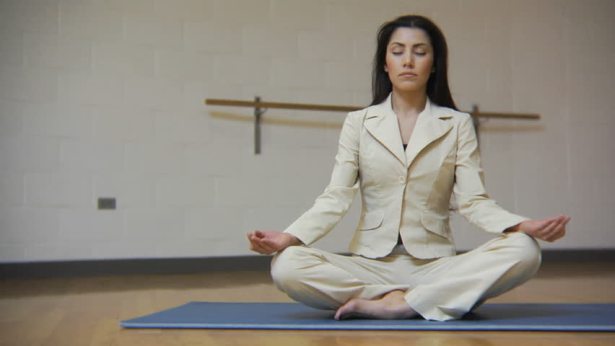
As people train, they tend to make other lifestyle changes. Nutrition, sleep, alcohol consumption, and stress management, all seem to come under consideration. Often, the changes are subtle, almost unconscious. The body knows what it likes and what it needs, and it will tell you. Since training forces you to monitor your body, you will, gradually, learn to listen to it, and respond accordingly. Improved health improves performance.
Strength is relative, so training is easily regulated. Different goals require different protocols, and so do different temperaments. Some people seem to live to train, others seek the minimum effective dose. As with most things, there’s a large middle group, with goals that bridge the two extremes, but I’ll wager that they all share the same positive, “what the hell” aftereffects. I’ll bet they all feel more physically efficient, even if they don’t use those words.
Ultimate human performance is really composed of a lot of smaller parts. For instance, building a bigger bench press would be a phase of strength training for our accountant, and our bank teller’s six pack abs would be the result of a well thought out and executed nutrition and conditioning plan. Because of all the benefits of strength training, physical efficiency is a natural effect. Now, becoming stronger, or leaner, may not, by themselves, lead to better accounting, or a steady climb up the banking career ladder, but certainly, they can be influencing factors. Certainly, they won’t hurt.
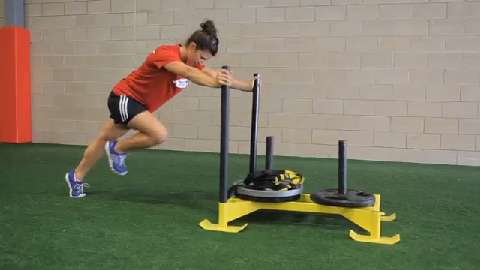
“For in everything that men do, the body is useful”. Socrates considered maintaining physical efficiency a citizen’s duty. Perhaps. I’m not sure that it’s possible to quantify the residual benefits of physical training, and ascribing business or personal success to it could be difficult, but if Socrates is right, that the body is useful in every endeavor, then preparing it makes sense.
Physical efficiency. Ultimate human performance. Training transferred to daily life.
Fist bump from Socrates.
By the way, the picture at the top is The Death of Socrates, by Jaques Louis David. Socrates is pretty ripped for a seventy year old man.
 mid-century muscle