The Strength Manifesto

I believe in strength, conditioning, and mobility. Strength is a transferable skill,and a strong person is likely reasonably mobile and conditioned, with a lifestyle dedicated to health and longevity.

What is strength? Why do we need it?

Webster’s New Universal Unabridged Dictionary (deluxe second edition!) offers nine definitions. My favorites are the first three: 1. the state or quality of being strong; force; power; vigor. 2. the power to resist strain, stress, etc.; toughness; durability. 3. the power to resist attack; impregnability.  Notice that the word power appears three times, and twice power is used to resist an outside force.
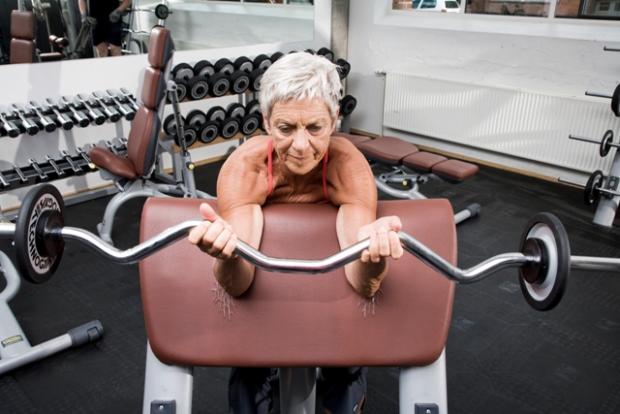
woman curling

Power, force, vigor, resistance, toughness, durability, impregnability. Pure and unadulterated, these qualities are traditionally and universally admired and sought after, the qualities of superheroes. These are the benefits of strength, and the building blocks of a long, happy life.

Typically, when we speak of physical strength, we’re talking about muscles and the ability to lift heavy things. Strength, and the pursuit of it, is often misunderstood. Perhaps we’re really talking about overall good health.

It’s rare to get to the mid-century mark and not have at least a trace of arthritis. No matter how strong a muscle is, it cannot move a non-functioning joint, but when you load your muscles and move through a full range of motion, you resist the conditions that attack your joints. Movement keeps them at bay, and loaded movement strengthen bones, tendons, and ligaments.

Being strong helps you resist sickness and disease. It’s impossible to be strong and unhealthy. Healthy habits are required to build strength, and being strong helps you avoid getting sick. The strong bones you build become impregnable to osteopenia and osteoporosis, your strong ligaments resist sprains, and your strong tendons resist tearing. Strength training will help you resist the attempts of fibromyalgia and chronic fatigue syndrome to hinder your vigor.

Who doesn’t want vigor, toughness, and durability? Modern society asks us to define ourselves by the amount of stress we accept, venerating those who accept the most. Vigor, toughness, and durability are qualities of strength most palatable to the world at large today. We love energetic people, and people who survive tough times. We love people who last a long time. Strong people are tough, durable, and energetic.

Getting strong requires more than just lifting heavy weights, like a healthy diet and plenty of rest. The same diet of lean protein, fruits and vegetables that builds strong muscles also builds healthy hearts, lungs, and organs. You avoid the complications associated with obesity, like type II diabetes and heart disease. You can manage your digestive system naturally, without the need for supplemental probiotics or over the counter heartburn medicine. Strength training requires a lot of sleep, and I submit that you need a lot of sleep to recover from everyday life, too.

So, we need strength to be powerful, forceful, impregnable, vigorous, tough, durable, and resistant to the attacks of stress and strain. We need strength to be healthy. We need  strength to live long, happy lives.

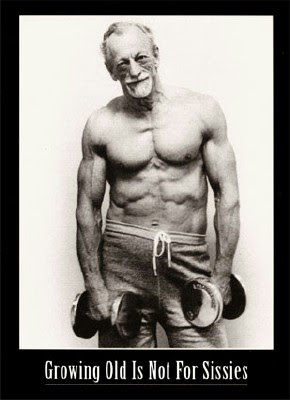
When strength is defined as good health rather than big, bulky muscles, it becomes a highly desirable quality. Instead of the requirement for lifting heavy weights, it becomes the key to the door of life. If we view strength as more than toned arms and six-pack abs, it becomes a noble goal worth pursuing. Living well should not be a chore.
old-man-poster-web

Mark Rippetoe, the Will Rogers of the strength and conditioning world, has said the strong people are generally more useful, and harder to kill. If you’re powerful, forceful, vigorous, and durable, you’re more useful. If you’re tough, impregnable, and resistant to stress and strain, you’re harder to kill.

Reasons enough to be strong, I say.
Be Your Own Experiment

The number one reason given for not training is lack of time. Often, after an opening sentence like that, you’ll see a pithy motivational quote.

80-Percent-of-Success-is-Showing-Up-Fitness-Quotes

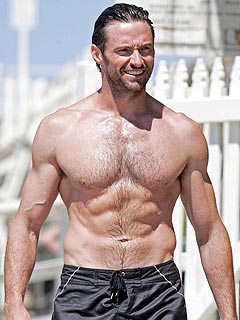
When you look at the mainstream Health and Fitness industry, it’s easy to understand the lack of time reason. The industry seems to be almost evenly split into two camps; weight loss and body shaping. Noble goals, each, but the protocols used have a lot of moving parts, from programs with a lot of exercises to menu planing and food preparation. It’s easy for a beginner to get overwhelmed. Consider, too, that failure to get the desired results, either fast enough or at all, can be a real blow to motivation. Training is hard when you’re discouraged. Sometimes in posts like these, you’ll see a picture of Hugh Jackman.

Hugh-Jackman-Body

However, if you train for strength, you make your goals measurable and attainable, because the process is simpler. Consequently, it’s easier to embrace the program. If you embrace the program, compliance is easy. Well, easier, anyway.

As you train and grow stronger, there’s an excellent chance that your weight will regulate, and your body will change shape. While it’s important to monitor the quantity and quality of your menu, with a strength training plan, it’s not the focus. As your knowledge increases, and your body changes, you’ll make some natural shifts in how you eat.

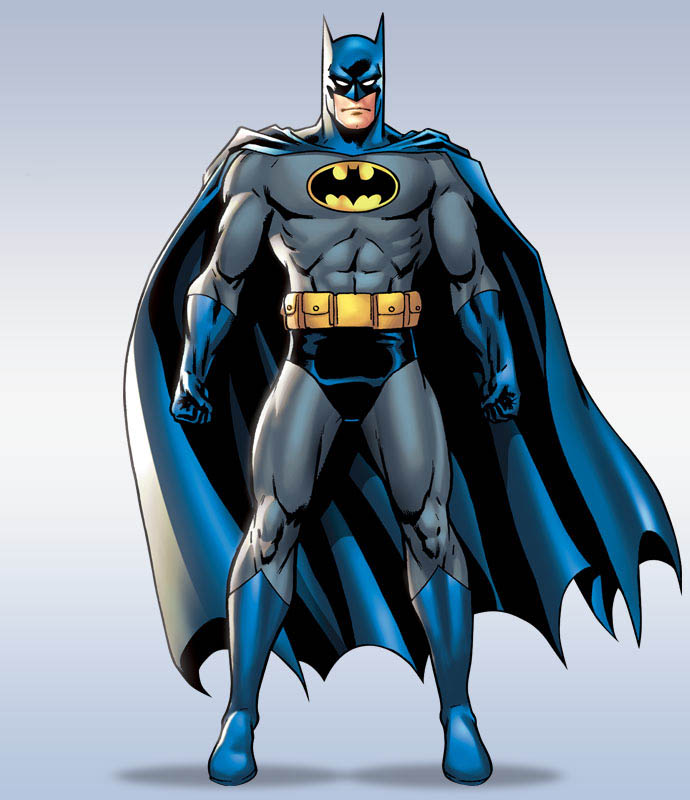
“The Four Hour Work Week”, by Timothy Ferriss, introduced me to the minimum effective dose. Essentially, you look for the smallest dose that will produce a desired outcome. Not a small effort, an efficient one. For physical training that will get and keep you strong, mobile, well conditioned, able to save the world daily and still have a life, general physical preparedness is the minimum effective dose. Batman is often used as an example of G.P.P

3031477-nealadamsbatmanHe’s down with G.P.P

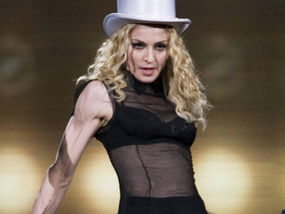
In the strength faction of the Health and Fitness industry, just as in society at large, there is a minimalist movement afoot. Power lifting legend Jim Wendler uses four lifts and a simple set and repetition scheme. Pavel Tsatsouline, the Russian evil genius behind the kettlebell movement, has reduced it to two twice. “The Naked Warrior” uses two body weight exercises, the Pistol squat and the One-armed Push-up to build and maintain strength anywhere, anytime, and his “Simple and Sinister” plan uses one kettlebell and two movements, the Get-up, and the Swing. These guys experimented with all they knew about strength training and reduced it to the minimum. Photos of Madonna are used a lot in motivational posts.

Madge is, too…117743_1

Now getting as big and strong as you possibly can does require a lot of time, although not necessarily a lot of exercises, but gaining the strength to be healthier and more productive overall really doesn’t take much time. Riddle me this:

You’ve decided to start training. You’ve tested, and you can manage a set of five push-ups, twenty body weight squats, and you can even manage one pull-up. Pioneering mid-century modern minimalist that you are, you’ve allotted thirty minutes a day, three days a week for physical training. Because it takes a little time to recover from the maximum effort you must make to execute the pull-up, you get only two sets done in your thirty minutes. Ten push-ups, two pull-ups, and forty squats. For the week, thirty, six, and one hundred and twenty movements. Not bad.

Because you feel pretty good, you persevere, and after four weeks, you test yourself, and you can do three sets of each exercise in thirty minutes. Your work capacity increases, and in a couple of more weeks, you get four sets in thirty minutes, and now your maximum pull-up set is two. People are asking you if you’ve been working out.

Flash forward a year. Now, you sometimes do push-ups with your feet elevated twelve inches, sometimes with a diamond hand position, sometimes with your hands staggered. Your one set maximum is twenty-two, and in your still thirty minute program, you often do three sets of fifteen. You can do three sets of five pull-ups, and because you saw a cool YouTube video, you bought a kettlebell and now you can do a hundred swings in five minutes. The coolest thing, though, is that you are crushing your buddy Baxter on the tennis court regularly.

Now, it won’t last this way forever, because progression is never strictly linear for long, but you will make progress. You will train a theory, test it, train some more, re-test, refine, add, subtract. You will develop a process, in this example, based on three simple exercises. You work on you.

Be your own experiment. If you wonder how strong you are, find out. Test yourself. Develop a plan, work it, and see what happens. Keep what works, toss what doesn’t. Tinker, as they say.

img-thing


Allow for surprise.

Practice, practice, practice

You’ve decided to get in shape. You want to feel better. You want to look better, and wanting to look better is a noble goal. Perhaps you’ve tried before, and stopped. Time passes, your conscience nags, you start again. The pressures of time squash motivation. Starting, stopping, starting again, and again. You don’t know what to do, and so, you do nothing.

Getting in shape, whatever that means, is more about mindset than anything. Becoming active after being largely sedentary for a length of time requires effort, but training your body is one area in life where you genuinely are rewarded for repeatedly showing up. However, you need to show up with a purpose, and a plan.

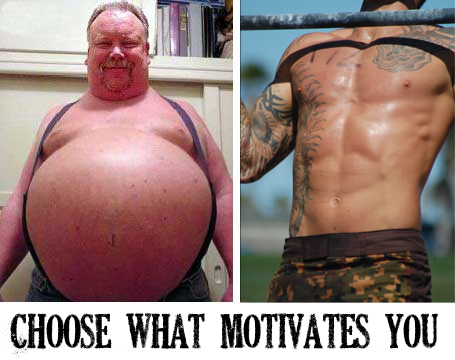
FITNESS-MOTIVATION


Training for strength is much easier than training to improve appearance, because the results are objective. If you can lift more weight than you could last week, you’re stronger, it’s as simple as that. Beauty being held in the eyes of the beholder, how do you decide if you look good enough? When you get beautiful enough, what then?

If you train to get stronger, the odds are better than even that you’ll look better, too. Train correctly, and you’ll feel better and stay motivated. Still, the question remains how to start.

Khloe-Kardashian-Fitness-Motivation

Strength is a skill, and like any skill, it requires practice. If you approach training your body by learning skills, like practicing the guitar, it becomes easier, and something you want to do. When you start practicing the guitar, you learn maybe three chords your first session. You gain some ability moving between them, maybe even a simple song, like “Happy Birthday”. You learn three more, and add “Twinkle, Twinkle, Little Star” to your repertoire. Now, you have skills.

Strength training is the same way. The first thing to learn is how to control your body by learning simple body weight exercises, like push-ups, glute bridges, and squats. Maybe you can even force a pull-up.  Consider them the easy chords, like C, A, and E. Still, the question, how to begin.

How about learning one skill? William of Occam said, “It is vain to do with more what can be done with less”. I agree. So, choose one strength skill, and practice it until you own it like “Twinkle, Twinkle, Little Star.”

My suggestion is the humble push-up. The push-up is the kindergarten of strength training. Master it, and you’ll learn everything there is to know about strength, from neutral spine to correct breathing. It’s easy to learn, and can be practiced every day, anywhere, anytime. It’s a measure of both strength and conditioning. If you can’t do five perfect push-ups, you’re weak. Being able to do double-digit repetitions is both gratifying and impressive.

Since I’ve presumed to give you a goal, I must give you a plan. A goal without a plan is just a dream. So, how do you go from zero push-ups to five to ten perfect push-ups? You “grease the groove.”

First, pick a starting day, and see how many perfect push-ups you can do. It will help to have someone watch your form, but if not, be honest. Perfect form means a straight back, level head, elbows about forty-five degrees form the body, and no sagging of the lower back. Ramrod straight. The total is your one set maximum. If you can’t do one, your one set max is, well, zero, but have no fear. Now, set a goal, because in four weeks, you’ll test again. Be reasonable, but make it a challenge. Perhaps you’ll decide to double your test number. That’s a good goal.

On day one, do twenty push-ups, no matter how many sets is takes. Since five repetitions is a classic training scheme, why not use it? Take as much rest between sets as you need. Power loves rest. You might do two sets in the morning, and two in the afternoon, whatever it takes to get your twenty reps. Day two, you’ll do twenty-one. The program looks like this:

Day 1) 20… Day 2) 21… Day 3) 22… Day 4) 23… Day 5) 24

take two days off…

Day 6) 24… Day 7) 25… Day 8) 26… Day 9) 27…Day 10) 28

two days off…

Day 11) 28… Day 12) 29… Day 13) 30… Day 14) 31… Day 15)… 32…

two days off…

Day 16) 32… Day 17) 33… Day 18) 34… Day 19) 35… Day 20) 35…

Rest for two days, and then test again. I’ll bet you double your baseline.

74615_10151448696491617_1447222563_n

Now, what if your baseline was zero? Do a modified push-up. Lean against a wall, and perform the push-up. You can use a desk, a coffee table, a sturdy chair. Kitchen counters work great, so do bathroom vanities. The further away from the wall or counter, the harder the effort. If you do a modified push-up, try to get lower as you proceed through the program. Again, I’ll bet that after four weeks you can do at least one real push-up, and if that’s all you can do, it’s more than when you started. You are stronger, and you have a new skill. Perhaps by now you can even rock “Smoke On The Water”.

It’s that simple. Rock on.